About the Greater Prairie Chicken
The Greater Prairie Chicken is a vital symbol of the American prairie. Their ancient dance and distinct booming call are indicators of a wild, healthy ecosystem. We are dedicated to protecting these strange but wonderful birds of our grasslands for gernerations to come

Their Dance & Story
Imagine a spring morning just east of Wichita, KS. You wake to the sound of drumming. You are so confused, until you look out the window and see 50 chicken-like birds strutting and seemingly dancing around on the grass. You are watching a Greater Prairie Chicken lek.
A lek is where Male Prairie Chickens show off and dance to attract a mate. Some of the things males do in the "dance" is puff out orange neck sacs (cervical apteria), raise "ears" (pinnae), droop their wings and stomp in place. The drumming you are hearing is the sound that comes with puffing out the cervical apteria.
Prairie Chicken leks are special because they take place on the same spots, year after year, annually in March, April, and May. No matter what happens to the lekking grounds (the area where the birds lek on), they stay loyal to them. There are some leks that are on supermarket parking lots, but the birds are there in April.
Another reason that leks are so interesting is that to the Native Americans of the plains, the leks are sacred and viewed as a sign of spring and new beginnings because, well they are signs of spring and new beginings.
At Save The Dance, we focus our efforts on this ritual because the lek is where life begins for the species. By safeguarding these ancient dancing grounds, we preserve the very essence of the prairie’s future and celebrate its survival.
Fast Facts
Range
Central high plains of North America.
Habitat
Native tallgrass and mixed-grass prairies.
Size
Up to 18 inches; medium-sized prairie grouse.
Status
crittictly endangered in Texas. in most regions it is listed as near threated with a red alert status; conservation-dependent.

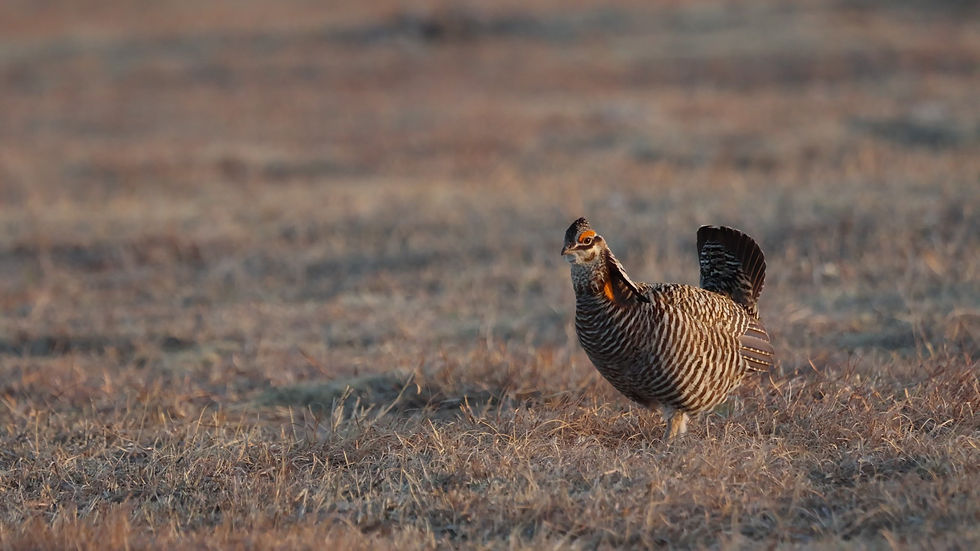
Video of a lekking Prairie Chicken

Habitat & Behavior
A healthy prairie requires vast, unfragmented spaces for survival. Greater Prairie Chickens thrive where grasses are tall and mixed with native wildflowers, providing cover from predators and plenty of seeds and insects. These birds are resilient foragers, navigating the deep grass with surprising stealth across the open wild prairie.
Why They’re at Risk
• Habitat Loss: Loss of native grasslands into farmland and Cities.
• Hunting: In Colorado, Nebraska, Kansas, South Dakota
As part of Save the Dance, I am working with Southern Plains Land Trust and the Lesser Prairie Chicken Initiative to help restore the native prairie. I am here to tell you what you can do to help their goals and to teach you a thing or to about Prairie Chickens and inspire you to help them.
How We’re Helping

How You Can Help
Ensuring the persistence of the prairie chicken’s dance requires collaborative action. You can donate to support land acquisition, visit a lek, plant native plants in your own backyard, volunteer for habitat restoration, or spread the word to ignite awareness.